Resistance training
Strength training that raises dopamine, norepinephrine and endorphins while building resilience.
Too little may be associated with
Muscle and bone loss, lower metabolic health.
Too much may be associated with
Overuse injury, joint strain, under-recovery.
Informational only — not medical advice.
Body systems
Organs
Functions
- Menopause (↑)
- Perimenopause (↑)
Diseases
Hormones
Neurotransmitters
Related
Books (7)
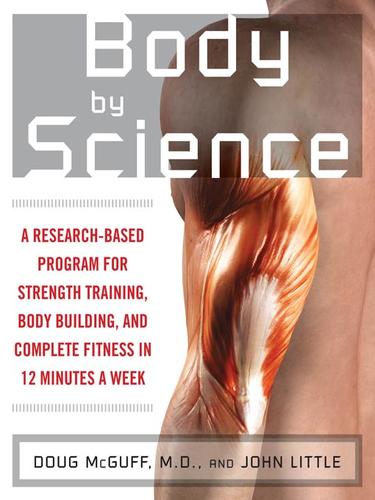 Body by Science: A Research-Based Program for Strength Training
 Built from Broken: A Science-Based Guide to Healing Painful Joints
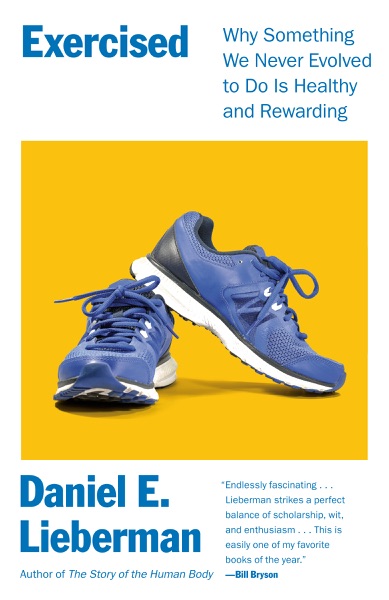 Exercised: Why Something We Never Evolved to Do Is Healthy and Rewarding
 Outlive: The Science and Art of Longevity
 Protocols: An Operating Manual for the Human Body
 ROAR: How to Match Your Food and Fitness to Your Unique Female Physiology
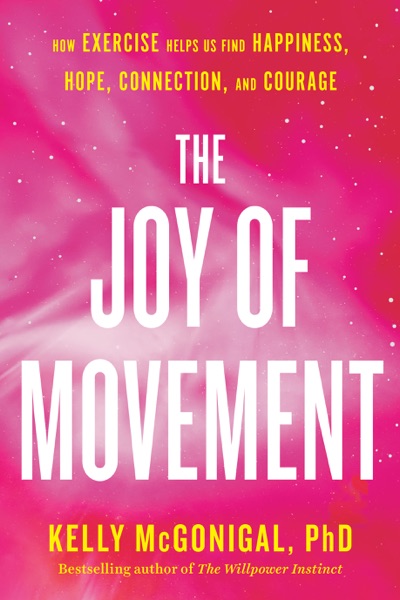 The Joy of Movement: How Exercise Helps Us Find Happiness, Hope, Connection, and Courage
Podcasts
- Huberman Lab
Stanford neuroscientist Andrew Huberman on physiology, stress, sleep, and self-regulation.

- The Neuro Experience
Louisa Nicola on brain performance, longevity, and human optimization.

- The Peter Attia Drive
Peter Attia on longevity, health, exercise, and behavior change.
Research (17)
- Anatomy, Bones Cowan et al. (2026) PubMed ↗
- Plasma levels of adrenaline, noradrenaline, dopamine, serotonin, and cortisol in sarcopenia: comparison with non-sarcopenic individuals and the impact of resistance exercise and nutrition interventions Chang et al. (2025) Full text ↗ PubMed ↗
- Combined aerobic and resistance exercise training restores perivascular adipose tissue function in the thoracic aorta of rats with heart failure Fontes et al. (2025) Full text ↗ PubMed ↗
- Optimizing Restless Legs Syndrome Care: Integrating Rehabilitation into Multimodal Management Younas et al. (2025) Full text ↗ PubMed ↗
- Nutritional priorities to support GLP-1 therapy for obesity: A joint advisory from the American College of Lifestyle Medicine, the American Society for Nutrition, the Obesity Medicine Association, and the Obesity Society Dariush (2025) Full text ↗ PubMed ↗
- A single bout of resistance or high-intensity interval training increases anti-cancer myokines and suppresses cancer cell growth in vitro in survivors of breast cancer Bettariga et al. (2025) Full text ↗ PubMed ↗
- Nutritional priorities to support GLP-1 therapy for obesity: A joint Advisory from the American College of Lifestyle Medicine, the American Society for Nutrition, the Obesity Medicine Association, and The Obesity Society Dariush (2025) Full text ↗ PubMed ↗
- Nutritional priorities to support GLP-1 therapy for obesity: a joint Advisory from the American College of Lifestyle Medicine, the American Society for Nutrition, the Obesity Medicine Association, and The Obesity Society Dariush (2025) Full text ↗ PubMed ↗
- The Effects of Omega-3 Supplementation Combined with Strength Training on Neuro-Biomarkers, Inflammatory and Antioxidant Responses, and the Lipid Profile in Physically Healthy Adults Okut et al. (2025) Full text ↗ PubMed ↗
- Improving sarcopenia in older adults: a systematic review and meta-analysis of randomized controlled trials of whey protein supplementation with or without resistance training Wang et al. (2024) PubMed ↗
- Collagen peptide supplementation for pain and function: is it effective? Kviatkovsky et al. (2022) PubMed ↗
- Hormonal and metabolic responses of older adults to resistance training in normobaric hypoxia Allsopp et al. (2022) Full text ↗ PubMed ↗
- Multifactorial Mechanism of Sarcopenia and Sarcopenic Obesity. Role of Physical Exercise, Microbiota and Myokines Bilski et al. (2022) Full text ↗ PubMed ↗
- Exercise Therapy for People With Sarcopenic Obesity: Myokines and Adipokines as Effective Actors Alizadeh (2022) Full text ↗ PubMed ↗
- Benefits and Mechanisms of Exercise Training for Knee Osteoarthritis Zeng et al. (2021) Full text ↗ PubMed ↗
Links
Community
Log in to rate and share your notes.
No contributions yet.